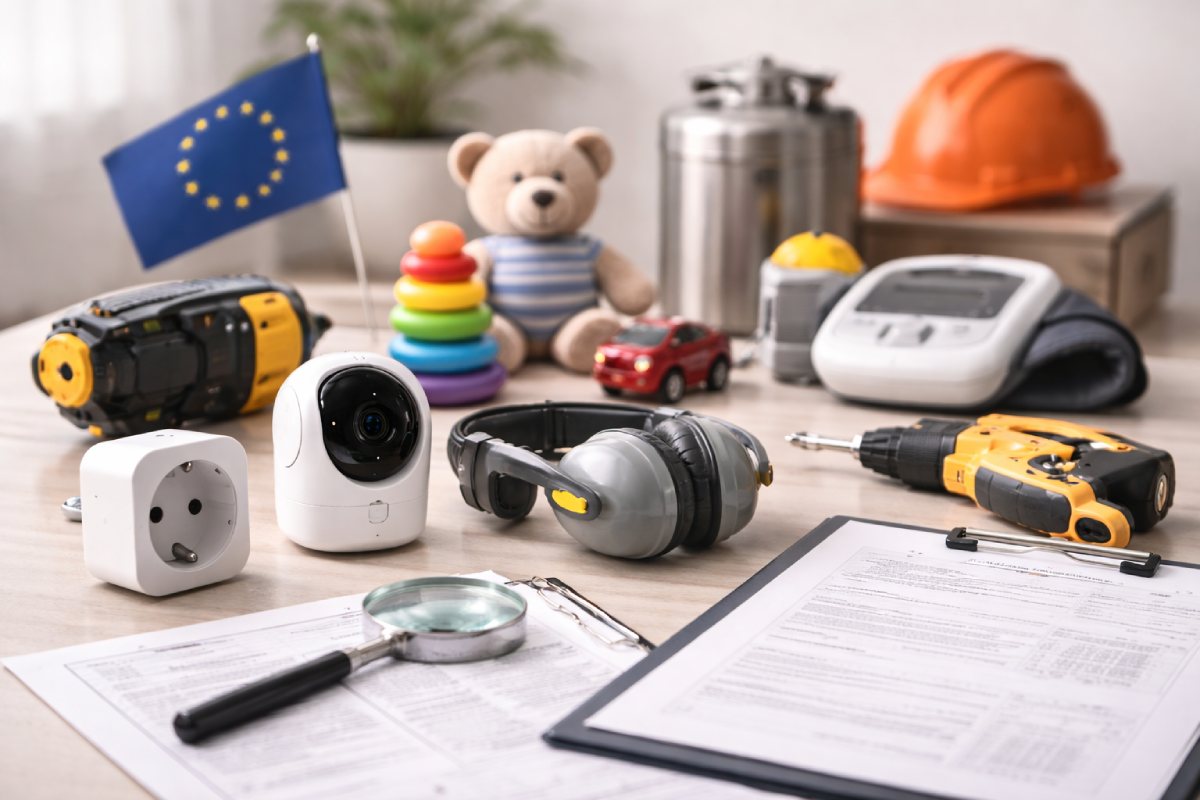
Everyone knows what CE marking is for but who needs CE marking?CE marking works as a required compliance standard that applies to numerous products that manufacturers sell across the European Union and the European Economic Area (EEA).
The mark shows that a product meets basic European Union safety requirements, health standards and environmental protection criteria which apply through relevant EU directives and regulations. The need for CE marking exists for some products but this requirement creates confusion among manufacturers, exporters, importers and online sellers.
This guide explains who needs CE marking, which product categories require it, and how to identify whether your product falls under CE legislation. Businesses that understand these requirements can prevent customs delays and penalties and market access problems.
Who Needs CE Marking?
You need the CE certification requirements if:
1) You manufacture products covered under EU CE legislation
You must obtain compliance with CE regulations before introducing your product to the European Union market.
2) You import products into the EU
You must ensure your imported product from outside Europe complies with CE requirements when you bring it into the EU.
3) You rebrand or modify a product
You become responsible for compliance when you sell a CE-marked product under your own brand name.
4) You sell online to EU customers
CE requirements remain in effect when you ship CE-regulated products to the EU through e-commerce channels.
Does Every Product Need CE Marking?
The answer to this question is no.
Many businesses encounter confusion at this specific point.
The CE marking requirement applies only to products that fall within the scope of particular EU directives and regulations.
- A plain wooden table requires CE marking according to the regulations that need to be followed for the product.
- A children’s toy, a medical device and an electrical appliance require CE marking in most cases.
The key question for assessment requires the evaluation of two options.
- The first question requires assessment of the speaker’s desire for CE marking.
- The second question requires an assessment of whether the product needs CE marking according to legal requirements.
Products That Require CE Certification in the EU
Below the main product categories establish which products need CE marking.
1) Electrical and Electronic Equipment
This product category represents the largest CE-marked product segment on the planet.
Your product will need CE certification if it operates through electricity, battery power or electronic components:
- Low Voltage Directive (LVD)
- Electromagnetic Compatibility (EMC) Directive
- Radio Equipment Directive (RED) (if wireless)
Examples:
- Ceiling fans
- LED lights
- Chargers and adapters
- Electric kettles
- Hair dryers
- Power tools
- Extension cords
- Electronic control panels
- Home appliances
Common Mistake
Many exporters assume only “high-end electronics” need CE.
The actual situation shows that all appliances that do not meet high-end standards need to follow CE regulations.
2) Wireless, Bluetooth, Wi-Fi & Radio Products
The product needs to follow European CE regulations because it uses wireless communication.
The product must comply with the Radio Equipment Directive (RED) regulations, like:
- Bluetooth earphones
- Smartwatches
- Routers and modems
- Wireless speakers
- IoT sensors
- GPS devices
- Walkie-talkies
- Wireless remotes
- RFID equipment
3) Machinery and Industrial Equipment
The Machinery Directive requires CE marking for machines and industrial systems that manufacturers produce.
Machinery and Industrial products requiring CE marking:
- Industrial mixers
- Conveyors
- Packaging machines
- Printing machines
- Cutting machines
- Compressors
- CNC machines
- Hydraulic systems
- Automated assembly lines
The professionals who use the machine need to follow CE marking requirements.
4) Medical Devices
Medical devices fall under one of the most regulated CE categories.
These are covered under:
- Medical Device Regulation (MDR)
- In Vitro Diagnostic Regulation (IVDR)
Examples
- Surgical instruments
- Patient monitors
- Thermometers
- Blood pressure monitors
- Glucose meters
- Diagnostic kits
- Dental devices
- Medical imaging accessories
- PPE used for medical purposes
The medical device industry needs third-party assessment which includes Notified Bodies for specific risk classes.
5) Personal Protective Equipment (PPE)
PPE is another highly controlled category.
The PPE Regulation (EU 2016/425) governs this regulation.
E.g.:
- Safety helmets
- Protective gloves
- Safety shoes
- Industrial goggles
- Face shields
- Respiratory masks (including certain types of filtering masks)
- High-visibility clothing
PPE isn’t just “industrial.” Even consumer PPE may need CE.
6) Toys and Children’s Products
Children’s products are regulated heavily for obvious safety reasons.
They fall under the Toy Safety Directive.
The CE marking product list for children’s items:
- Dolls
- Plastic toys
- Educational toys
- Toy vehicles
- Toy guns
- Soft toys
- Battery-operated toys
- Musical toys
Even small things like slime, craft kits, or puzzle toys need CE marking.
7) Construction Products
The Construction Products Regulation (CPR) applies to your product if it has applications in construction work.
Examples:
- Cement and concrete products
- Fire doors
- Structural steel components
- Thermal insulation materials
- Roofing materials
- Glass used in construction
- Pipes and fittings for building use
The category demands extra performance declarations as its standard requirement.
8) Pressure Equipment
The Pressure Equipment Directive (PED) governs all products that handle or transport pressurized fluids.
Examples:
- Boilers
- Pressure vessels
- Gas cylinders
- Industrial tanks
- Steam systems
- High-pressure valves
9) Gas Appliances
The Gas Appliances Regulation applies to your product which uses gas as its combustion fuel.
CE mark mandatory products for gas appliances:
- Gas stoves
- Gas heaters
- Gas boilers
- Gas grills
10) Measuring Instruments
The Measuring Instruments Directive (MID) establishes compliance requirements for specific measuring devices.
Examples:
- Water meters
- Gas meters
- Heat meters
- Weighing scales (for regulated trade use)
- Taxi meters
- Electricity meters
11) Lifts and Safety Components for Lifts
The Lifts Directive includes all requirements needed for lifts and their safety components.
Examples:
- Passenger lifts
- Industrial lifts
- Lift safety components
12) Explosives for Civil Use
The EU safety regulations and tracing requirements control these substances through their established rules.
Examples:
- Industrial explosives
- Detonators
- Certain pyrotechnic devices for civil use
13) Recreational Craft and Marine Equipment
The CE certification requirements apply to manufacturers who produce recreational boats and marine vessels.
Recreational Craft and Marine products requiring CE marking:
- Recreational boats
- Jet skis
- Marine engines (in certain cases)
14) Equipment Used in Potentially Explosive Atmospheres (ATEX)
The ATEX Directive applies to products created for use in dangerous working environments.
Examples:
- Explosion-proof lighting
- Industrial sensors for refineries
- Equipment for chemical plants
- Dust explosion prevention equipment
15) Simple Pressure Vessels
Regulators treat these devices as separate entities from standard pressure equipment.
Examples:
- Air receivers
- Certain compressed air tanks
16) Outdoor Noise Emission Equipment
Certain outdoor equipment must meet European Union regulations regarding noise emissions.
CE mark mandatory products for outdoor equipment:
- Lawn mowers
- Construction equipment
- Outdoor compressors
- Generators
What Happens If You Sell Without CE Marking?
This situation involves more than just a minor documentation problem.
The product requires CE marking for sales but you sell the product without it which results in the following consequences for you:
- stop all shipments at the border
- remove your products from the market
- face severe financial penalties
- you will have to stop selling products in the market
- lose all its distribution partners
- face both legal proceedings and claims for damages
- experience harm to its public image
The export credibility of most industries suffers permanent damage after a single compliance failure.
FAQs
1. Who needs a CE marking?
Any manufacturer, importer, or brand owner must apply CE marking to their products that enter the EU/EEA market and comply with CE regulations.
2. Where is the CE mark required?
The CE mark is required for products across the market in the European Union and EEA countries. While compliance isn’t optional, it applies only to items listed in specific directives governing safety and performance standards.
3. What countries require a CE mark?
Countries like Norway, Iceland, and Liechtenstein require the CE mark for meeting the standards set by the EU and the wider EEA.
4. Who is responsible for the CE mark?
Accountability begins with the manufacturer; still, importers along with sellers share a role in confirming goods carry the correct CE marking before reaching markets.
Summing Up
So, who needs CE marking? CE marking becomes mandatory when a product meets the requirements of EU CE directives and regulations. The law requires this certification process which permits products to enter the EU market while proving their compliance with essential safety and performance standards.
The most common product categories that need CE marking include electrical equipment, wireless devices, machinery, medical devices, personal protective equipment, toys, construction products and pressure equipment.
Businesses must identify the appropriate directives that require them to perform testing and documentation work to obtain a valid EU Declaration of Conformity. Companies achieve CE compliance by effectively managing risks which helps them avoid expensive operational interruptions while maintaining their ability to serve EU customers over an extended period.